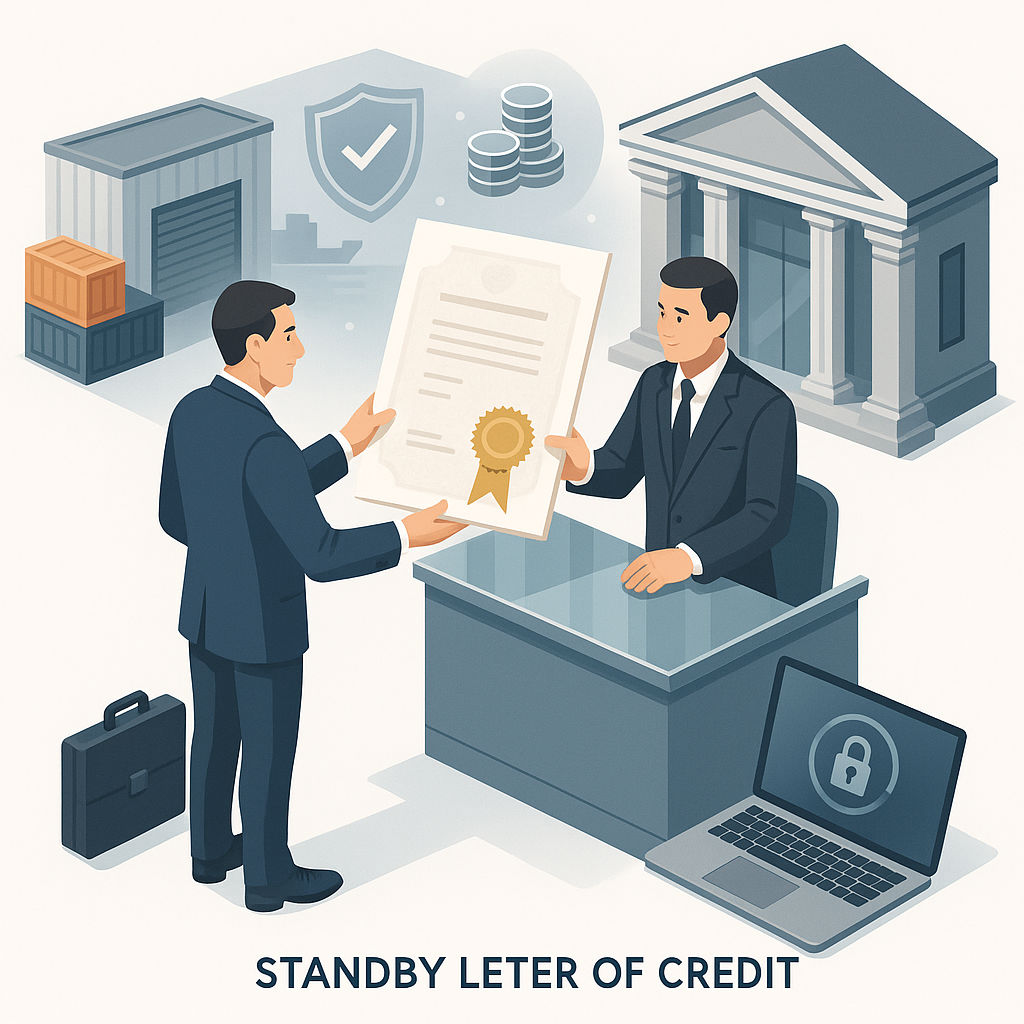
Standby Letters Of Credit in Pinnacle Financial Partners
Standby Letters of Credit — Pinnacle Financial Partners
A Standby Letter of Credit (SBLC) from Pinnacle Financial Partners is a flexible, secure financial instrument designed to support business commitments, enhance creditworthiness, and reduce counterparty risk. Acting as a payment guarantee issued by the bank on behalf of a customer (the applicant), an SBLC assures the beneficiary that funds will be available in the event the applicant fails to meet contractual obligations. This product is valuable for domestic and international transactions across industries such as construction, trade, leasing, and professional services.
Key Features
- Payment assurance: The SBLC provides a conditional guarantee of payment to the beneficiary if the applicant fails to perform according to the terms of the underlying agreement.
- Customizable terms: Tenors, currencies, amount structures, and conditions can be tailored to match the needs of both applicant and beneficiary.
- Domestic and international use: Suitable for transactions within the domestic market as well as cross-border contracts, subject to applicable regulations and correspondent bank relationships.
- Types available: Performance standby, financial standby, bid bonds, and advanced payment guarantees.
- Available confirmations: Where necessary, confirmation by a correspondent bank can add an additional level of security for beneficiaries.
Benefits for Applicants
- Enhances credit profile: Enables applicants to meet counterparty requirements without posting cash security or letters of credit from trading partners.
- Preserves liquidity: Applicants can provide assurances without tying up working capital, as collateral arrangements can be structured to be efficient and economical.
- Competitive advantage: Provides confidence to clients and partners, helping applicants win bids, contracts, and new business.
- Flexible security options: Collateral can include cash, deposit accounts, or eligible securities, depending on the bank’s credit assessment and credit policies.
Benefits for Beneficiaries
- Reduced counterparty risk: The beneficiary receives a payment guarantee backed by a regulated financial institution.
- Clear claim process: SBLCs typically include well-defined draw conditions and documentation requirements, making claims straightforward when properly presented.
- Reliability: Confirmed standbys provide additional certainty when an issuing bank’s credit risk is a concern.
Common Use Cases
- Construction and performance bonds: Guarantee project completion or contractor performance under a construction contract.
- Commercial leases: Provide security to landlords in lieu of larger cash deposits.
- Trade and supply agreements: Ensure payment or performance in supply contracts, especially where buyer credit is uncertain.
- Tender and bid bonds: Support public or private procurement bids by guaranteeing a bidder’s commitment.
- Financial guarantees: Backstop obligations such as loan repayment or lease obligations.
How an SBLC Works
- The applicant requests an SBLC from the bank, providing details of the beneficiary, the underlying contract, required amount, and tenor.
- The bank assesses the applicant’s creditworthiness and determines collateral or security requirements.
- Once approved, the bank issues the SBLC to the beneficiary or their bank, specifying documentary conditions that must be met for draw.
- If the applicant fails to meet the contractual obligations, the beneficiary presents a compliant demand with required documents to the issuing bank.
- After verification, the bank pays the beneficiary up to the SBLC amount and seeks reimbursement from the applicant or applies collateral as agreed.
Documentation and Requirements
Typical documentation requested by the bank includes corporate financial statements, details of the underlying contract, identification documentation, board resolutions or authorized signatory documentation, and any collateral agreements. Corporate applicants may need to provide articles of incorporation, operating agreements, and proof of authority for signers. Requirements vary based on transaction complexity, SBLC amount, and tenor.
Fees and Pricing
Fees for Standby Letters of Credit generally include issuance fees, drawing fees, amendment fees, and an annual or periodic standby fee calculated as a percentage of the SBLC amount. Pricing reflects the credit risk of the applicant, collateral provided, tenor, and any required confirmations. Specific pricing is established through a formal credit review and quoted within the bank’s terms and conditions.
Collateral and Credit Considerations
The bank evaluates the applicant’s financial position and may require collateral to secure the SBLC. Acceptable collateral types and margin requirements depend on internal credit policies. Collateral release is typically governed by the SBLC expiration or termination provisions, and by any separate collateral agreement in place.
Regulatory and Compliance Aspects
Issuance and administration of SBLCs comply with applicable banking regulations, anti-money laundering controls, and sanctions screening. Beneficiaries and applicants should be aware that regulatory requirements may affect the structure, permissible counterparties, and cross-border execution of standby facilities.
Risk Management
For applicants, it is important to understand contingent liabilities represented by outstanding SBLCs and to manage exposure through appropriate limits and collateralization. Beneficiaries should carefully review the SBLC wording, draw conditions, and expiration dates to ensure enforceability when necessary. Both parties should involve legal counsel for review of material agreements and underlying contracts.
Frequently Asked Questions
- Can an SBLC be amended?
- Yes. Amendments to amount, expiry date, or beneficiary require agreement among the issuing bank, applicant, and often the beneficiary.
- What distinguishes an SBLC from a commercial letter of credit?
- An SBLC is primarily a backup payment mechanism activated upon applicant default, whereas commercial letters of credit are used to facilitate actual documentary trade payments tied to shipping and delivery documents.
- How long does it take to obtain an SBLC?
- Timing depends on credit review, documentation, and collateral arrangements. Standard processing may take days to weeks based on transaction complexity.
Conclusion
Standby Letters of Credit at Pinnacle Financial Partners offer a robust tool for managing credit risk, supporting contractual performance, and enhancing business credibility. With customizable structures, a clear claim mechanism, and options for confirmation, SBLCs can be tailored to meet the needs of diverse commercial and financial transactions. Applicants and beneficiaries should engage with their banking representative early in the contracting process to align terms, understand fee structures, and ensure compliance with applicable requirements.
Address Bank: The Pinnacle at Symphony Place Nashville, Tennessee, U.S.
Bank: Pinnacle Financial Partners
Headquarters: Nashville
Products: International & Trade
Type: Standby Letters of Credit










Banks2go — A Comprehensive Marketplace for Financial and Insurance Services
Banks2go is a user-friendly marketplace that helps you discover, compare, and apply for banking and insurance products in one place. Whether you’re building credit, opening a business account, or shopping for auto insurance, Banks2go brings together transparent information, smart tools, and trusted partners to make selection simple and fast.
Banking Products
Credit Cards- Compare a wide range of cards across APRs, intro 0% APR periods, rewards structures (cash back, travel miles, transferable points), welcome bonuses, balance transfer terms, foreign transaction fees, and penalty rates.
- Filter by your goals—everyday cash back, premium travel, no-annual-fee, balance transfer, or credit building—and see estimated value based on your spending profile.
- Get instant prequalification checks with no impact to your credit score, complete secure online applications in minutes, and track application status in real time.
- See key terms clearly explained: grace periods, minimum payments, credit limits, authorized user rules, and redemption options (statement credit, travel portals, partner transfers).
- Access educational guidance on responsible credit use, utilization ratios, and how on-time payments can strengthen your credit over time.
- Compare business accounts side-by-side on monthly maintenance fees, minimum balance requirements, included free transactions, ACH and wire pricing, cash deposit limits, ATM access, and treasury features.
- Explore value-added services like merchant processing, virtual cards, integrated invoicing, and expense management.
- Onboard quickly online for LLCs, corporations, and sole proprietors with clear documentation checklists and guided KYC/AML steps.
- Connect your account to popular accounting and finance tools (e.g., QuickBooks, Xero) for streamlined reconciliation, payroll, and tax prep.
- View specialized options for startups, freelancers, and nonprofits, including accounts with no or low fees and scalable limits as your business grows.
- Find student-friendly cards with no or low annual fees, simple rewards, spending controls, and features designed to build credit responsibly.
- Get clear eligibility guidance for both domestic and international students, including SSN/ITIN requirements and income verification tips.
- Learn about security deposits for secured cards, credit limit increases with good behavior, and tools that help track spending and avoid late fees.
- Access resources on establishing credit from scratch, protecting your score, and using student benefits like streaming or transit rewards.
Insurance
Auto Insurance- Compare quotes from top-rated national and regional carriers across states, with coverage options that include liability, collision, comprehensive, uninsured/underinsured motorist, roadside assistance, and rental reimbursement.
- Customize deductibles and limits and see how changes affect your monthly premium in real time.
- Explore common discounts—safe driver, multi-policy, good student, usage-based/telematics, multi-vehicle—and understand eligibility criteria.
- Bind e-policies in minutes with digital ID cards and flexible payment options (monthly, quarterly, semi-annual).
- Access plain-English explanations of state minimums, gap insurance for financed vehicles, and when it makes sense to add or drop coverage types.
Easy Selection
Smart Filtering and Personalization- Use dynamic filters and guided questionnaires to surface recommendations based on your financial profile, risk tolerance, and specific goals (e.g., pay down debt, earn travel rewards, reduce fees).
- Compare key terms side-by-side—rates, fees, limits, perks, coverage details, and exclusions—so trade-offs are obvious and transparent.
- Read concise summaries and detailed breakdowns in plain English, with highlight callouts for gotchas like deferred interest, balance transfer fees, or coverage gaps.
Wide Catalog
Broad, Up-to-Date Network- Access a wide network of U.S. banks, credit unions, fintechs, and national insurers—all in one place—so you don’t need to visit branches or spend hours on phone calls.
- See current promotions, limited-time offers, and partner deals aggregated and refreshed regularly, with clear eligibility and expiration details.
- Benefit from standardized comparisons that make complex products easy to understand and evaluate.
Why Banks2go
- Speed and Transparency: From prequalification to application and policy binding, steps are consolidated and clearly explained.
- Education Built In: Bite-sized guides and checklists help you make confident decisions without financial jargon.
- Secure and Privacy-Conscious: Application flows follow industry-standard security protocols, and prequalification tools avoid hard credit pulls unless you opt to apply.
Choose what you need
 More than
50000
services
 Convenient search
 The most beautiful site
 The site works 24/7