Lockbox Services Home BancShares in USA
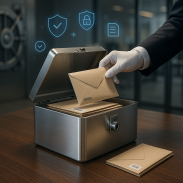
Lockbox Services
Lockbox services provide a secure, efficient, and scalable way to manage incoming payments, reduce processing time, and improve cash flow visibility. Designed for organizations that receive a high volume of paper-based or electronic payments—such as utility companies, healthcare providers, financial institutions, and large corporations—lockbox solutions centralize payment receipt, remittance processing, and funds deposit through a trusted third-party provider or bank.
What a Lockbox Service Does
At its core, a lockbox is a secure post office box operated by a bank or payment processor where a company’s customers send payments. The provider collects mail from the box, opens envelopes, extracts payment instruments and remittance information, and processes transactions on behalf of the company. Processed funds are deposited directly into the company’s accounts and detailed remittance data is transmitted electronically for reconciliation with accounts receivable systems. Modern lockbox services expand beyond paper check processing to include full-service check imaging, electronic payments capture, Automated Clearing House (ACH) processing, and integrated data delivery via secure APIs or batch files.
Key Benefits
- Accelerated Cash Flow: Faster check and payment processing reduces collection cycles and increases available working capital.
- Operational Efficiency: Outsourcing payment handling reduces in-house manual labor, lowers errors, and frees staff for higher-value tasks.
- Improved Accuracy: High-speed scanning, validation, and automated posting minimize misapplied payments and reconciliation discrepancies.
- Enhanced Security: Secure handling, controlled access to physical mail, and strict data protection protocols reduce fraud and information exposure.
- Scalability and Flexibility: Services can be sized to seasonal volumes and can route payments to multiple accounts or business units as required.
- Regulatory Compliance: Providers maintain audit trails, encryption, and retention policies to meet industry and legal requirements such as PCI, SOX, and data privacy regulations.
Common Features and Capabilities
- Mail Capture & Opening: Daily retrieval of mail from USPS or other carriers, secure opening, and segregation of payment instruments.
- High-Speed Imaging: Front/back check imaging and secure digital storage for auditability and remote access.
- Data Extraction & OCR: Optical character recognition and intelligent data capture to extract remittance details automatically.
- Payment Conversion: Check-to-ACH conversion services to accelerate clearing times and lower processing costs.
- Electronic Remittance Delivery: Secure transmission of payment details via API, SFTP, or direct integration with ERP and accounting platforms.
- Exception Handling: Specialized workflows for mismatches, short payments, disputed accounts, and manual review.
- Fraud Detection: Multi-layered fraud screening including signature verification, check washing detection, and anomaly analytics.
Types of Lockbox Services
Providers offer a range of lockbox formats to match different business needs:
- Wholesale Lockbox: Designed for high-volume enterprise receivables with complex remittance and batch reporting requirements.
- Retail Lockbox: Ideal for businesses processing a large number of small-value payments, such as utilities and consumer services.
- Hybrid Lockbox: Combines physical check processing with electronic payment capture, suitable for transitioning to a digital receivables model.
- Remote Deposit / Virtual Lockbox: Uses image capture and remote deposit capture (RDC) to enable decentralized deposit with centralized posting.
Who Benefits Most
Lockbox services are particularly beneficial for organizations that:
- Receive large volumes of customer payments by mail, including checks and remittance coupons.
- Need to reduce days sales outstanding (DSO) and improve liquidity.
- Require reliable reconciliation between payments and invoice systems across multiple business units or locations.
- Must strengthen payment security and comply with regulatory standards.
- Are migrating towards electronic payments but still manage substantial paper-based receivables.
Security and Compliance
Security is a cornerstone of professional lockbox operations. Reputable providers implement strict physical controls at processing sites, secure chain-of-custody for mail, role-based access, and multi-factor authentication for data systems. Digital records and transmission channels are encrypted to industry standards (TLS/SSL, AES), and imaging archives are protected with redundancy and retention policies to support audits and dispute resolution. Many providers adhere to frameworks such as PCI DSS for payment data security, SOC 1/SOC 2 audits, and privacy regulations relevant to the client’s operations (e.g., GDPR, CCPA). Choosing a provider with clear SLA terms and documented compliance certifications helps minimize operational and regulatory risk.
Integration and Implementation
Modern lockbox providers offer flexible integration options to make implementation straightforward:
- API Integration: Real-time remittance posting and status updates via secure REST APIs for ERP and billing systems.
- Batch Files & SFTP: Scheduled delivery of detailed payment files for reconciliation and cash application.
- Hosted Portals: Self-service portals for searching images, viewing remittance details, and downloading reports.
- Custom Mapping: Data transformation services to match client-specific formats and chart-of-accounts structures.
Implementation typically follows a phased approach involving requirements gathering, mail-forwarding configuration, account setup, testing, and a coordinated cutover. Providers often supply dedicated onboarding resources and post-implementation support to ensure continuity.
How to Choose a Lockbox Provider
Selecting the right partner requires evaluating several critical factors:
- Volume & Transaction Mix: Ensure the provider can handle peak volumes and mixed payment types (checks, ACH, credit, electronic remittance).
- Service Levels & Turnaround Times: Review daily processing cutoffs, reporting frequency, and SLA guarantees for funds availability.
- Integration Capability: Confirm the ease of connecting with your ERP, billing, and reconciliation systems.
- Security & Compliance: Verify certifications, audit results, and data protection measures.
- Cost Structure: Understand fee models—per-item, monthly, setup, imaging, storage, and exception handling—to forecast true total cost.
- Customer Support: Evaluate responsiveness, escalation paths, and availability of dedicated account management.
Typical Use Cases
- Utilities consolidating monthly bill payments from residential and commercial customers.
- Insurance companies processing premium payments and agency remittances.
- Healthcare providers reconciling patient payments and third-party collections.
- Large retailers or subscription services managing recurring payments and membership fees.
- Manufacturers and distributors centralizing receipts from multiple sales channels.
Common Questions
Q: How quickly are funds available?
A: Availability depends on the provider’s processing schedule, deposit cutoff times, and banking rules. Many services offer next-day or same-day deposit options for checks converted to ACH or where expedited processing is contracted.
Q: Can lockbox data be delivered in real time?
A: Yes. API-enabled providers can deliver remittance details and check images in near real time. Batch delivery via secure file transfer is also common for daily reconciliation.
Q: How are exceptions handled?
A: Exceptions—such as unmatched invoice numbers, short payments, or unreadable remittances—are routed to exception workflows with human review, client notification, and configurable resolution procedures.
Conclusion
Lockbox services remain a strategic tool for companies seeking to optimize receivables processing, improve liquidity, and reduce operational costs. Whether you are modernizing a paper-heavy workflow or combining physical and digital payment channels, a well-chosen lockbox partner can streamline collections, strengthen security, and enable faster, more accurate cash application. Evaluate providers on capacity, integration, security, and cost to ensure the service aligns with your business goals and compliance requirements.