Invoice Financing / Factoring in First Hawaiian Bank
Invoice Financing / Factoring at First Hawaiian Bank
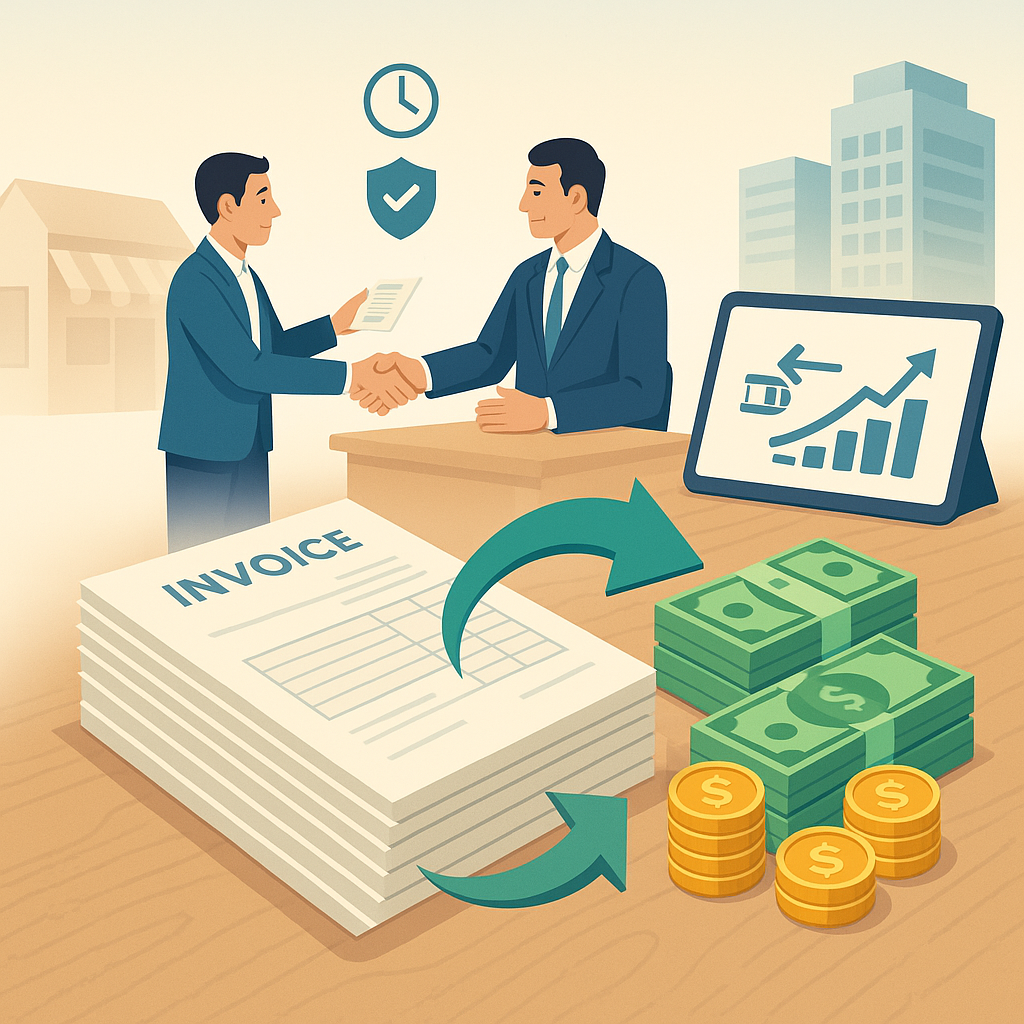
Invoice financing and factoring at First Hawaiian Bank provide flexible working capital solutions designed to accelerate cash flow, reduce collection burden, and support business growth. Whether a company needs to bridge gaps between billing and payment, finance rapid expansion, or stabilize seasonal revenue swings, invoice-based lending can be an effective tool. This product description outlines how invoice financing and factoring work, the core benefits for small and mid-size enterprises, typical eligibility criteria, application steps, risk considerations, and practical tips for maximizing the value of the facility.
What is Invoice Financing and Factoring?
Invoice financing is a general term for funding arrangements that allow a business to borrow against outstanding invoices or sell invoices to a financing provider. Factoring is a specific type of invoice financing in which a company sells its accounts receivable to a factor at a discount in exchange for immediate cash. In both models, receivables are converted into working capital that can be used for payroll, inventory, vendor payments, or growth initiatives. First Hawaiian Bank’s approach to invoice financing offers structured solutions that blend cash advances, credit management support, and streamlined operations to help maintain liquidity without taking on long-term debt on the balance sheet.
Core Features
- Advance Rates: A portion of the invoice value is advanced immediately, with the balance remitted after collection, less fees.
- Flexible Facility Size: Facilities can be tailored to receivables volume and seasonal patterns, allowing scalability as business grows.
- Credit and Collection Support: Options for recourse and non-recourse factoring, depending on customer credit quality and risk tolerance.
- Streamlined Onboarding: Efficient credit assessment and documentation processes to minimize disruption and speed activation.
- Integration Capabilities: Compatibility with common invoicing and accounting systems to simplify reporting and reconciliation.
Benefits for Your Business
Invoice financing and factoring unlock cash tied up in receivables, creating immediate benefits:
- Improved Cash Flow: Rapid conversion of invoices to cash reduces funding gaps and helps cover short-term expenses.
- Predictable Liquidity: Regular access to a receivables facility enables better forecasting and working capital planning.
- Reduced DSO: Days Sales Outstanding can be lowered as collections become managed by the financing partner or accelerated through advances.
- Outsourced Collections: Factoring can relieve internal teams of collection duties, allowing focus on core business functions.
- Support for Growth: Funds can be deployed immediately to seize growth opportunities such as ramping production or expanding sales efforts.
Typical Use Cases
- Manufacturers and distributors facing seasonal demand spikes and needing inventory funding.
- Service providers with long payment cycles seeking to smooth payroll and operating expenses.
- Businesses onboarding large corporate customers that have extended payment terms.
- Young companies with strong receivables but limited access to traditional term loans.
Eligibility and Credit Considerations
Eligibility for invoice financing or factoring is typically based on the quality and composition of a company’s receivables, the creditworthiness of the company’s customers, and the business’s invoicing and collection practices. Key factors include:
- Concentration of receivables: Diversified customer base reduces concentration risk.
- Customer credit profiles: Buyers with stable payment histories and strong credit support better advance terms.
- Invoice documentation: Clear billing, delivery confirmations, and contractual evidence of sale expedite underwriting.
- Industry and business history: Established businesses with predictable sales patterns often secure more favorable terms.
How It Works: Step-by-Step
- Assessment: The bank reviews receivables, customer credit, and company financials to determine eligibility and facility size.
- Onboarding: Contracts and servicing arrangements are agreed upon, including recourse terms and fees.
- Submission: Invoices are submitted to the facility, either electronically or through integrated accounting systems.
- Advance: A percentage of the invoice value is advanced—typically within one to two business days.
- Collection and Settlement: When invoices are paid, the remaining balance is released to the company, less fees and any reserve amounts.
Fees, Terms, and Structures
Fee structures for invoice financing and factoring vary based on advance rates, invoice age, customer credit risk, and facility terms. Common elements include an advance fee or discount fee, service charges for collections, and possible setup or monitoring fees. Facilities may be structured with either recourse (where the company retains responsibility if invoices are unpaid) or non-recourse (where credit risk is transferred to the factor subject to agreed conditions). Clear disclosure of fees and reserve mechanics helps ensure transparency in cost-of-capital calculations.
Risk Management and Compliance
Effective risk management is central to invoice financing. The bank employs credit analysis of obligors, verification procedures for invoices, and monitoring of payment patterns to mitigate risk. Businesses should maintain robust invoicing and delivery records, adopt clear credit policies for customers, and communicate transparently about assigned receivables if required. Compliance with contractual, regulatory, and tax obligations is essential to preserve the smooth operation of the facility.
Practical Tips for Maximizing Value
- Keep customer records up to date and resolve disputes quickly to preserve invoice collectability.
- Integrate accounting systems to reduce administrative lag when submitting invoices for funding.
- Negotiate reserve and fee structures that align with seasonal cash flow needs and margin expectations.
- Educate customers about the factoring process where appropriate to ensure timely payments and avoid confusion.
Conclusion
Invoice financing and factoring at First Hawaiian Bank are practical financing tools that convert receivables into immediate liquidity, support growth, and improve financial stability. With tailored facilities, responsive underwriting, and operational support, businesses can reduce cash conversion cycles and focus resources on strategic priorities. Assess your receivables profile, weigh the cost of capital, and consider how a receivables-based facility can fit into your broader working capital strategy.
For businesses seeking to accelerate cash flow without resorting to long-term borrowing, invoice financing and factoring offer a pragmatic, transaction-driven alternative that aligns funding with sales activity and helps maintain momentum in competitive markets.
Address Bank: First Hawaiian Center Honolulu, Hawaii, US, USA
Bank: First Hawaiian Bank
Headquarters: Honolulu
Products: Loans & Credit
Type: Invoice Financing / Factoring








Viewed Items
Banks2go — A Comprehensive Marketplace for Financial and Insurance Services
Banks2go is a user-friendly marketplace that helps you discover, compare, and apply for banking and insurance products in one place. Whether you’re building credit, opening a business account, or shopping for auto insurance, Banks2go brings together transparent information, smart tools, and trusted partners to make selection simple and fast.
Banking Products
Credit Cards- Compare a wide range of cards across APRs, intro 0% APR periods, rewards structures (cash back, travel miles, transferable points), welcome bonuses, balance transfer terms, foreign transaction fees, and penalty rates.
- Filter by your goals—everyday cash back, premium travel, no-annual-fee, balance transfer, or credit building—and see estimated value based on your spending profile.
- Get instant prequalification checks with no impact to your credit score, complete secure online applications in minutes, and track application status in real time.
- See key terms clearly explained: grace periods, minimum payments, credit limits, authorized user rules, and redemption options (statement credit, travel portals, partner transfers).
- Access educational guidance on responsible credit use, utilization ratios, and how on-time payments can strengthen your credit over time.
- Compare business accounts side-by-side on monthly maintenance fees, minimum balance requirements, included free transactions, ACH and wire pricing, cash deposit limits, ATM access, and treasury features.
- Explore value-added services like merchant processing, virtual cards, integrated invoicing, and expense management.
- Onboard quickly online for LLCs, corporations, and sole proprietors with clear documentation checklists and guided KYC/AML steps.
- Connect your account to popular accounting and finance tools (e.g., QuickBooks, Xero) for streamlined reconciliation, payroll, and tax prep.
- View specialized options for startups, freelancers, and nonprofits, including accounts with no or low fees and scalable limits as your business grows.
- Find student-friendly cards with no or low annual fees, simple rewards, spending controls, and features designed to build credit responsibly.
- Get clear eligibility guidance for both domestic and international students, including SSN/ITIN requirements and income verification tips.
- Learn about security deposits for secured cards, credit limit increases with good behavior, and tools that help track spending and avoid late fees.
- Access resources on establishing credit from scratch, protecting your score, and using student benefits like streaming or transit rewards.
Insurance
Auto Insurance- Compare quotes from top-rated national and regional carriers across states, with coverage options that include liability, collision, comprehensive, uninsured/underinsured motorist, roadside assistance, and rental reimbursement.
- Customize deductibles and limits and see how changes affect your monthly premium in real time.
- Explore common discounts—safe driver, multi-policy, good student, usage-based/telematics, multi-vehicle—and understand eligibility criteria.
- Bind e-policies in minutes with digital ID cards and flexible payment options (monthly, quarterly, semi-annual).
- Access plain-English explanations of state minimums, gap insurance for financed vehicles, and when it makes sense to add or drop coverage types.
Easy Selection
Smart Filtering and Personalization- Use dynamic filters and guided questionnaires to surface recommendations based on your financial profile, risk tolerance, and specific goals (e.g., pay down debt, earn travel rewards, reduce fees).
- Compare key terms side-by-side—rates, fees, limits, perks, coverage details, and exclusions—so trade-offs are obvious and transparent.
- Read concise summaries and detailed breakdowns in plain English, with highlight callouts for gotchas like deferred interest, balance transfer fees, or coverage gaps.
Wide Catalog
Broad, Up-to-Date Network- Access a wide network of U.S. banks, credit unions, fintechs, and national insurers—all in one place—so you don’t need to visit branches or spend hours on phone calls.
- See current promotions, limited-time offers, and partner deals aggregated and refreshed regularly, with clear eligibility and expiration details.
- Benefit from standardized comparisons that make complex products easy to understand and evaluate.
Why Banks2go
- Speed and Transparency: From prequalification to application and policy binding, steps are consolidated and clearly explained.
- Education Built In: Bite-sized guides and checklists help you make confident decisions without financial jargon.
- Secure and Privacy-Conscious: Application flows follow industry-standard security protocols, and prequalification tools avoid hard credit pulls unless you opt to apply.
Choose what you need
 More than
50000
services
 Convenient search
 The most beautiful site
 The site works 24/7