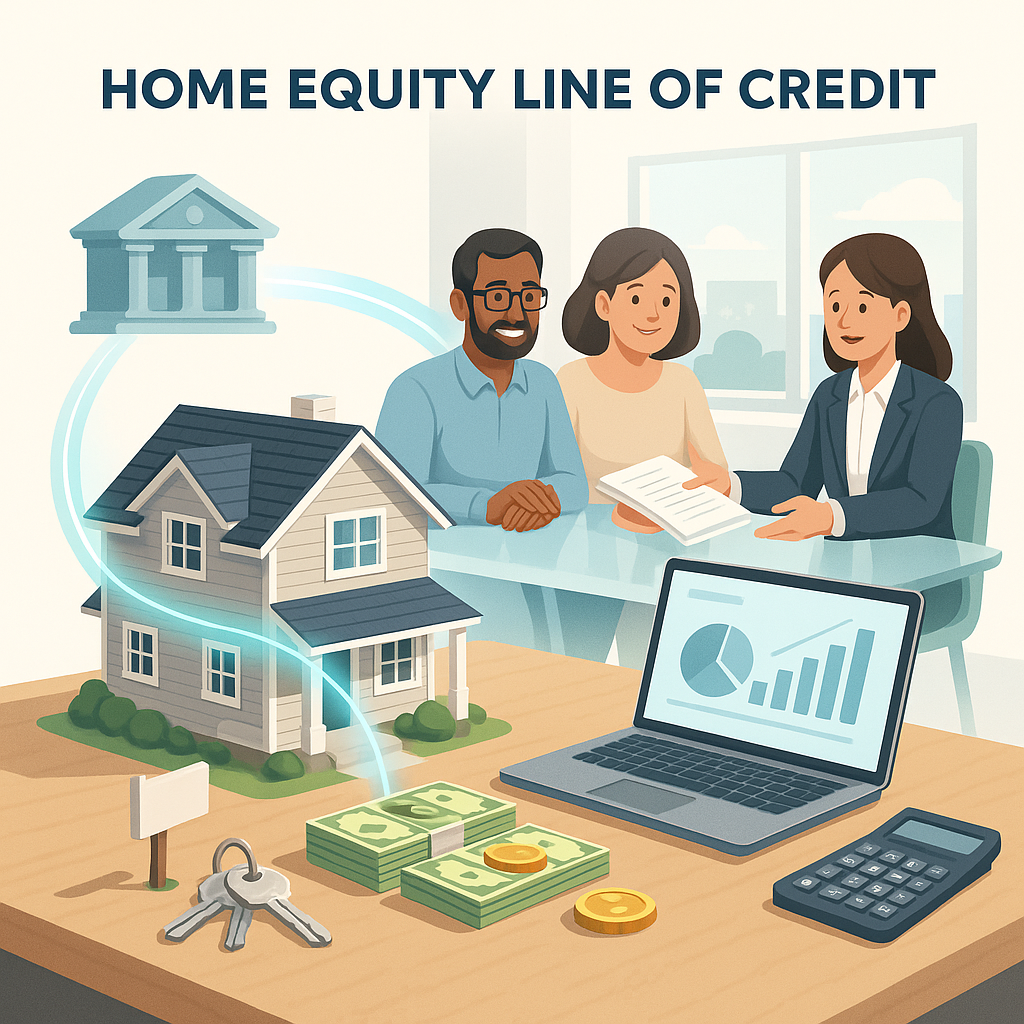
Home Equity Line Of Credit (HELOC) in Bank of America
Home Equity Line of Credit (HELOC) — Bank of America
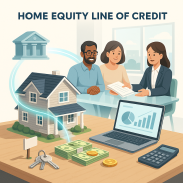
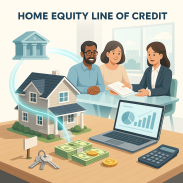
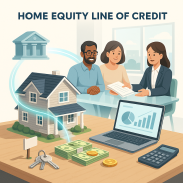
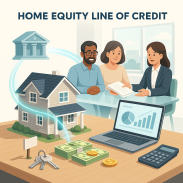
A Home Equity Line of Credit (HELOC) from Bank of America is a flexible financing solution that lets homeowners borrow against the equity built up in their property. Designed to offer ongoing access to funds during a draw period and convenient repayment options afterward, a HELOC can be used for home improvements, debt consolidation, major purchases, education expenses, or as a financial safety net. This description outlines how a HELOC typically works, the features and benefits you can expect, eligibility considerations, application steps, and important risks and responsibilities to keep in mind.
How a HELOC Works
A HELOC functions like a credit line secured by your home. When approved, you receive a maximum credit limit based on a percentage of your home’s appraised value minus the balance of any existing mortgage(s). During the draw period, you can borrow, repay, and borrow again up to the available credit, using checks, a credit card tied to the account, online transfers, or other access methods provided by the bank. Interest is charged on the outstanding balance only.
HELOCs commonly have two phases: the draw period (often several years) when you can access funds and may be required to make interest-only or principal-and-interest payments, followed by a repayment period when you can no longer draw and must pay down the outstanding principal and interest. Terms, draw periods, and repayment schedules vary by product and borrower qualification.
Key Features and Benefits
- Flexible access to funds: Borrow what you need, when you need it, up to your approved limit.
- Interest-only payment option: During the draw period, many borrowers can choose to pay interest only, lowering monthly payments temporarily (principal still outstanding).
- Lower rates than unsecured credit: Because a HELOC is secured by your home, interest rates are generally lower than those of credit cards or personal loans.
- Potential tax advantages: Interest may be tax-deductible when funds are used for qualifying home improvements — consult a tax professional for guidance.
- Convert to fixed rates: Some programs offer the ability to convert part or all of your outstanding balance to a fixed-rate option to lock in predictable payments.
- Online account management: Manage draws, payments, and balances conveniently through online banking and mobile apps.
Typical Eligibility Requirements
Eligibility for a HELOC is based on several financial and property factors. Common requirements include:
- Established equity in your home — lenders often allow borrowing up to a certain combined loan-to-value (CLTV) ratio.
- A strong credit history and credit score.
- Stable income and acceptable debt-to-income ratio.
- Clear title to the property and appropriate homeowner insurance coverage.
Each application is evaluated individually. Lenders may request documentation such as pay stubs, tax returns, mortgage statements, and an appraisal to determine property value.
Terms, Rates, and Fees
HELOCs usually feature a variable interest rate tied to an index plus a margin. Rates can change over time, affecting monthly payments. Some programs offer competitive introductory rates or promotional pricing for a limited time. Other features to watch for include minimum interest rate floors, rate caps, and the option to convert to a fixed-rate advance.
Possible fees may include application fees, appraisal fees, closing costs, annual fees, or inactivity fees. Fee structures and whether lender-paid closing costs or waivers are available vary by product and borrower profile. Review the loan estimate and disclosure documents carefully before accepting an offer.
Repayment and Responsibility
Repayment obligations depend on the HELOC’s structure. During the draw period, some borrowers pay only interest; others pay both principal and interest. Once the repayment period begins, borrowers must repay principal and interest according to an amortization schedule. Failing to make payments can result in late fees, damage to credit scores, and ultimately foreclosure, as the HELOC is secured by your home.
When a HELOC Makes Sense
A HELOC is often a good fit when you need flexible access to a large sum over time, such as for phased home renovations, ongoing educational costs, or to consolidate higher-interest debt. It can be particularly useful if you prefer to borrow only what you use rather than taking a lump-sum home equity loan. Consider whether you can handle variable-rate payments and the discipline to manage a revolving line of credit.
Potential Drawbacks and Considerations
- Variable interest rates: Monthly payments can increase if interest rates rise.
- Risk to your home: Because the loan is secured by your property, failing to repay can lead to foreclosure.
- Fees and costs: Appraisals, closing costs, and annual fees can add to the total cost of borrowing.
- Possible impacts on future borrowing: A HELOC increases your total indebtedness and may affect future mortgage or refinancing options.
How to Apply and What to Expect
The application process typically involves an initial inquiry and prequalification, documentation submission, credit and income verification, a property appraisal, and final underwriting. Processing times vary. If approved, you’ll receive disclosure documents describing rates, terms, and fees. Review all terms carefully and ask questions about how draws, payments, and rate adjustments are handled before accepting the HELOC.
Frequently Asked Questions
Can I use a HELOC for anything?
In general, funds can be used for many purposes, but certain restrictions may apply. Consider whether the planned use is appropriate given the secured nature of the loan.
Will a HELOC affect my credit score?
Opening a HELOC may result in a credit inquiry and changes to your credit utilization and account mix, which can influence your credit score. Responsible use and timely payments are important to maintain credit health.
Can I refinance or pay off a HELOC early?
Many HELOCs allow early repayment, though some plans may include fees or conditions for paying off or refinancing. Review disclosure documents for any prepayment penalties.
Final Notes
A HELOC can be a powerful financial tool when used thoughtfully and with a clear repayment plan. Evaluate your financial goals, compare features and costs, and consider consulting a financial advisor or tax professional to determine whether a HELOC aligns with your long-term strategy. Read all loan documents carefully to understand how rates, fees, and repayment work for the specific offer you receive.
Address Bank: Bank of America Corporate Center, Charlotte, North Carolina, US (corporate/legal) Bank of America Tower (Manhattan), New York City, US (executive), USA
Bank: Bank of America
Headquarters: Charlotte
Products: Loans & Credit
Type: Home Equity Line of Credit (HELOC)
Viewed Items
Banks2go — A Comprehensive Marketplace for Financial and Insurance Services
Banks2go is a user-friendly marketplace that helps you discover, compare, and apply for banking and insurance products in one place. Whether you’re building credit, opening a business account, or shopping for auto insurance, Banks2go brings together transparent information, smart tools, and trusted partners to make selection simple and fast.
Banking Products
Credit Cards- Compare a wide range of cards across APRs, intro 0% APR periods, rewards structures (cash back, travel miles, transferable points), welcome bonuses, balance transfer terms, foreign transaction fees, and penalty rates.
- Filter by your goals—everyday cash back, premium travel, no-annual-fee, balance transfer, or credit building—and see estimated value based on your spending profile.
- Get instant prequalification checks with no impact to your credit score, complete secure online applications in minutes, and track application status in real time.
- See key terms clearly explained: grace periods, minimum payments, credit limits, authorized user rules, and redemption options (statement credit, travel portals, partner transfers).
- Access educational guidance on responsible credit use, utilization ratios, and how on-time payments can strengthen your credit over time.
- Compare business accounts side-by-side on monthly maintenance fees, minimum balance requirements, included free transactions, ACH and wire pricing, cash deposit limits, ATM access, and treasury features.
- Explore value-added services like merchant processing, virtual cards, integrated invoicing, and expense management.
- Onboard quickly online for LLCs, corporations, and sole proprietors with clear documentation checklists and guided KYC/AML steps.
- Connect your account to popular accounting and finance tools (e.g., QuickBooks, Xero) for streamlined reconciliation, payroll, and tax prep.
- View specialized options for startups, freelancers, and nonprofits, including accounts with no or low fees and scalable limits as your business grows.
- Find student-friendly cards with no or low annual fees, simple rewards, spending controls, and features designed to build credit responsibly.
- Get clear eligibility guidance for both domestic and international students, including SSN/ITIN requirements and income verification tips.
- Learn about security deposits for secured cards, credit limit increases with good behavior, and tools that help track spending and avoid late fees.
- Access resources on establishing credit from scratch, protecting your score, and using student benefits like streaming or transit rewards.
Insurance
Auto Insurance- Compare quotes from top-rated national and regional carriers across states, with coverage options that include liability, collision, comprehensive, uninsured/underinsured motorist, roadside assistance, and rental reimbursement.
- Customize deductibles and limits and see how changes affect your monthly premium in real time.
- Explore common discounts—safe driver, multi-policy, good student, usage-based/telematics, multi-vehicle—and understand eligibility criteria.
- Bind e-policies in minutes with digital ID cards and flexible payment options (monthly, quarterly, semi-annual).
- Access plain-English explanations of state minimums, gap insurance for financed vehicles, and when it makes sense to add or drop coverage types.
Easy Selection
Smart Filtering and Personalization- Use dynamic filters and guided questionnaires to surface recommendations based on your financial profile, risk tolerance, and specific goals (e.g., pay down debt, earn travel rewards, reduce fees).
- Compare key terms side-by-side—rates, fees, limits, perks, coverage details, and exclusions—so trade-offs are obvious and transparent.
- Read concise summaries and detailed breakdowns in plain English, with highlight callouts for gotchas like deferred interest, balance transfer fees, or coverage gaps.
Wide Catalog
Broad, Up-to-Date Network- Access a wide network of U.S. banks, credit unions, fintechs, and national insurers—all in one place—so you don’t need to visit branches or spend hours on phone calls.
- See current promotions, limited-time offers, and partner deals aggregated and refreshed regularly, with clear eligibility and expiration details.
- Benefit from standardized comparisons that make complex products easy to understand and evaluate.
Why Banks2go
- Speed and Transparency: From prequalification to application and policy binding, steps are consolidated and clearly explained.
- Education Built In: Bite-sized guides and checklists help you make confident decisions without financial jargon.
- Secure and Privacy-Conscious: Application flows follow industry-standard security protocols, and prequalification tools avoid hard credit pulls unless you opt to apply.
Choose what you need
 More than
50000
services
 Convenient search
 The most beautiful site
 The site works 24/7