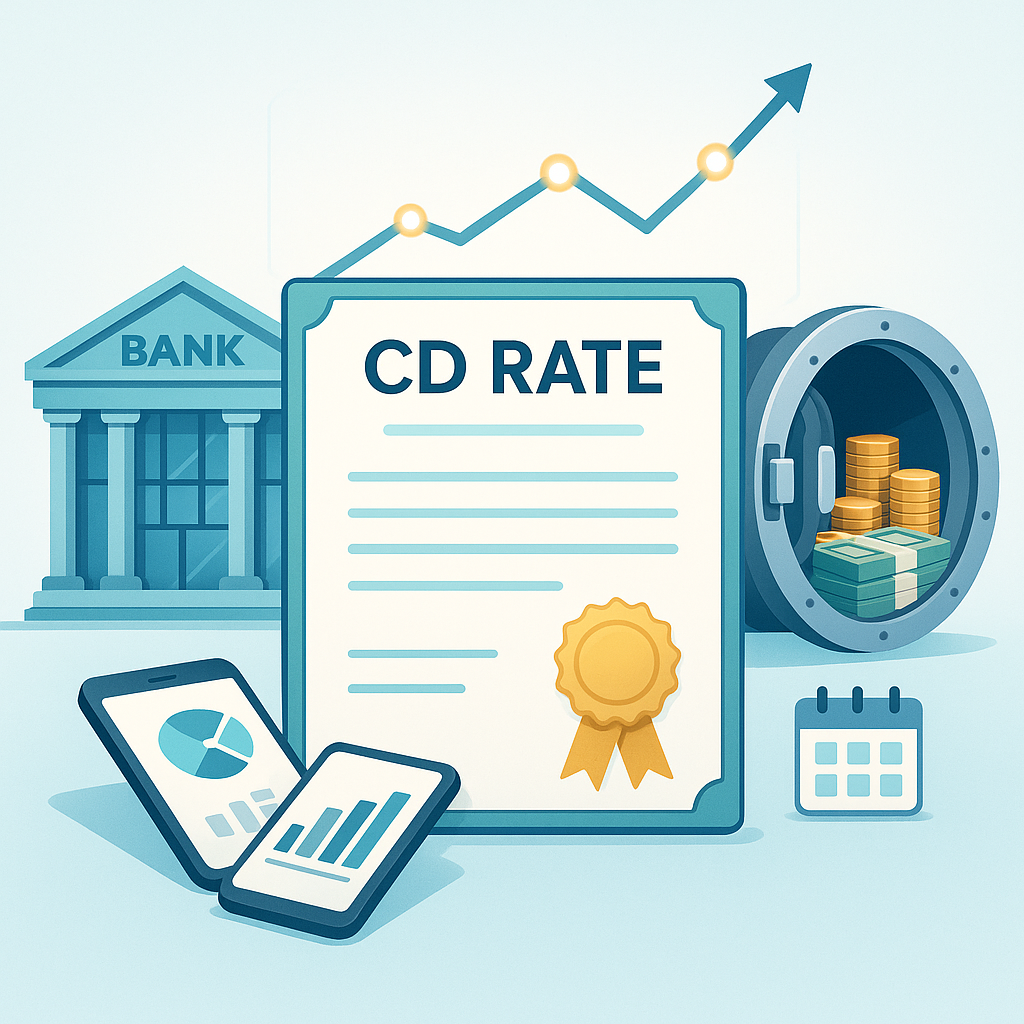
CD Rate in Truist Financial
CD Rate in Truist Financial
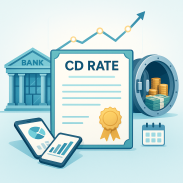
A Certificate of Deposit (CD) at Truist Financial is a time-deposit savings product designed for customers who want a predictable, low-risk way to grow their savings over a fixed term. CDs offer a guaranteed interest rate for the length of the term, making them a reliable tool for short- to medium-term savings goals such as emergency reserves, planned purchases, or supplemental income planning. Truist's CD offerings combine the stability of a fixed-rate investment with the security typically provided by regulated banking institutions.
Key Features
- Fixed interest rate — Your rate is locked in for the duration of the CD term, protecting you from market fluctuations during that period.
- Multiple term options — Terms commonly range from a few months to several years, allowing you to select a maturity period that aligns with your financial timeline.
- Minimum deposit requirements — CDs generally require an initial deposit to open. Minimums may vary by product and promotional offers.
- Interest compounding and payment — Interest may compound daily, monthly, or be paid at maturity depending on the specific CD product you choose.
- Automatic renewal — At maturity, CDs often renew automatically unless you provide alternative instructions; renewal terms and rates may differ from the original.
- FDIC insurance — Eligible deposits are typically protected by federal insurance up to applicable limits, offering an additional layer of security for your principal and accrued interest.
Benefits of Choosing a CD
Investing in a CD can be an attractive option for conservative savers because it combines capital preservation with predictable returns. CDs are especially useful for individuals who:
- Prefer a guaranteed return over potentially volatile market investments;
- Have a defined future expense and want to ensure funds are available when needed;
- Seek to diversify a conservative portion of their portfolio with low-risk instruments;
- Want to ladder multiple CDs to balance liquidity and higher long-term rates.
How CD Rates Work
CD rates are expressed as an annual percentage yield (APY), which reflects the effective annual return including compounding. The APY you receive is determined by the interest rate offered when you open the CD and the frequency of interest compounding. Promotional rates may be available at times, and product terms with longer maturities typically offer higher rates compared to shorter-term CDs, though this is subject to market conditions and institutional pricing decisions.
Choosing the Right Term
Selecting an appropriate term requires balancing your need for liquidity against the desire for a higher return. Short-term CDs are useful when you expect to need funds soon or want to re-evaluate your options in a changing rate environment. Longer-term CDs often provide higher yields but require you to commit funds for a longer period. A laddering strategy — dividing your investment across multiple CDs with staggered maturities — can offer a compromise, providing periodic access to funds while capturing higher rates on longer terms.
Early Withdrawal and Penalties
CDs are designed to hold funds for the agreed-upon term. Withdrawing funds before maturity typically triggers an early withdrawal penalty, which can reduce or eliminate the interest earned and, in some cases, reduce principal if the penalty is substantial. It is important to review penalty terms before opening a CD and to consider whether you may need emergency access to the funds during the CD term. Some products may offer limited exceptions or alternative options for early access under specific circumstances.
Tax Considerations
Interest earned on a CD is generally considered taxable income in the year it is credited or received, depending on the account terms and tax rules in your jurisdiction. Interest is usually taxable at federal and state levels where applicable. For tax-deferred accounts, rules may differ. Consider consulting a tax advisor to understand how CD interest will affect your individual tax situation and whether tax-advantaged account options are appropriate for your goals.
Opening a CD
Opening a CD typically involves selecting a term, meeting the minimum deposit requirement, and providing necessary identification and account information. You can choose how interest will be paid or compounded and decide whether to enable automatic renewal at maturity. Account documentation will outline all terms, including APY, compounding frequency, maturity date, and penalties for early withdrawal. Make sure to read the terms carefully before completing your purchase.
Practical Tips
- Compare terms and compounding frequencies, not just headline rates, to understand real returns.
- Consider laddering to maintain liquidity while benefiting from higher yields on longer terms.
- Keep a portion of your emergency savings in liquid accounts to avoid early withdrawal penalties on CDs.
- Review maturity notifications and plan ahead to decide whether to withdraw, reinvest, or roll funds into a new product.
- Maintain awareness of promotional offers and rate changes that may affect future investment decisions.
Frequently Asked Questions
Who is a CD best for? A CD is most appropriate for conservative savers who want guaranteed returns and can commit funds for a set period. How safe is my money? Eligible deposits are generally protected by federal deposit insurance up to applicable limits. Can I add funds after opening? Standard CDs usually do not allow additional deposits after the account is opened; some institutions offer special products that permit incremental additions. What happens at maturity? At maturity you can withdraw the funds, transfer them to another account, or allow the CD to automatically renew under current terms.
Conclusion
A CD at Truist Financial can be an effective component of a balanced savings strategy, offering predictability, security, and a fixed return for a defined period. By understanding terms such as APY, compounding frequency, early withdrawal penalties, and FDIC coverage, you can select the CD product and term that best support your financial goals. Thoughtful planning — including consideration of laddering and tax implications — will help you maximize the benefits of this conservative, reliable savings vehicle.
Address Bank: Truist Center, Charlotte, North Carolina, U.S.
Bank: Truist Financial
Headquarters: Charlotte
Products: Banking & Savings
Type: Cd Rate
Viewed Items
Banks2go — A Comprehensive Marketplace for Financial and Insurance Services
Banks2go is a user-friendly marketplace that helps you discover, compare, and apply for banking and insurance products in one place. Whether you’re building credit, opening a business account, or shopping for auto insurance, Banks2go brings together transparent information, smart tools, and trusted partners to make selection simple and fast.
Banking Products
Credit Cards- Compare a wide range of cards across APRs, intro 0% APR periods, rewards structures (cash back, travel miles, transferable points), welcome bonuses, balance transfer terms, foreign transaction fees, and penalty rates.
- Filter by your goals—everyday cash back, premium travel, no-annual-fee, balance transfer, or credit building—and see estimated value based on your spending profile.
- Get instant prequalification checks with no impact to your credit score, complete secure online applications in minutes, and track application status in real time.
- See key terms clearly explained: grace periods, minimum payments, credit limits, authorized user rules, and redemption options (statement credit, travel portals, partner transfers).
- Access educational guidance on responsible credit use, utilization ratios, and how on-time payments can strengthen your credit over time.
- Compare business accounts side-by-side on monthly maintenance fees, minimum balance requirements, included free transactions, ACH and wire pricing, cash deposit limits, ATM access, and treasury features.
- Explore value-added services like merchant processing, virtual cards, integrated invoicing, and expense management.
- Onboard quickly online for LLCs, corporations, and sole proprietors with clear documentation checklists and guided KYC/AML steps.
- Connect your account to popular accounting and finance tools (e.g., QuickBooks, Xero) for streamlined reconciliation, payroll, and tax prep.
- View specialized options for startups, freelancers, and nonprofits, including accounts with no or low fees and scalable limits as your business grows.
- Find student-friendly cards with no or low annual fees, simple rewards, spending controls, and features designed to build credit responsibly.
- Get clear eligibility guidance for both domestic and international students, including SSN/ITIN requirements and income verification tips.
- Learn about security deposits for secured cards, credit limit increases with good behavior, and tools that help track spending and avoid late fees.
- Access resources on establishing credit from scratch, protecting your score, and using student benefits like streaming or transit rewards.
Insurance
Auto Insurance- Compare quotes from top-rated national and regional carriers across states, with coverage options that include liability, collision, comprehensive, uninsured/underinsured motorist, roadside assistance, and rental reimbursement.
- Customize deductibles and limits and see how changes affect your monthly premium in real time.
- Explore common discounts—safe driver, multi-policy, good student, usage-based/telematics, multi-vehicle—and understand eligibility criteria.
- Bind e-policies in minutes with digital ID cards and flexible payment options (monthly, quarterly, semi-annual).
- Access plain-English explanations of state minimums, gap insurance for financed vehicles, and when it makes sense to add or drop coverage types.
Easy Selection
Smart Filtering and Personalization- Use dynamic filters and guided questionnaires to surface recommendations based on your financial profile, risk tolerance, and specific goals (e.g., pay down debt, earn travel rewards, reduce fees).
- Compare key terms side-by-side—rates, fees, limits, perks, coverage details, and exclusions—so trade-offs are obvious and transparent.
- Read concise summaries and detailed breakdowns in plain English, with highlight callouts for gotchas like deferred interest, balance transfer fees, or coverage gaps.
Wide Catalog
Broad, Up-to-Date Network- Access a wide network of U.S. banks, credit unions, fintechs, and national insurers—all in one place—so you don’t need to visit branches or spend hours on phone calls.
- See current promotions, limited-time offers, and partner deals aggregated and refreshed regularly, with clear eligibility and expiration details.
- Benefit from standardized comparisons that make complex products easy to understand and evaluate.
Why Banks2go
- Speed and Transparency: From prequalification to application and policy binding, steps are consolidated and clearly explained.
- Education Built In: Bite-sized guides and checklists help you make confident decisions without financial jargon.
- Secure and Privacy-Conscious: Application flows follow industry-standard security protocols, and prequalification tools avoid hard credit pulls unless you opt to apply.
Choose what you need
 More than
50000
services
 Convenient search
 The most beautiful site
 The site works 24/7