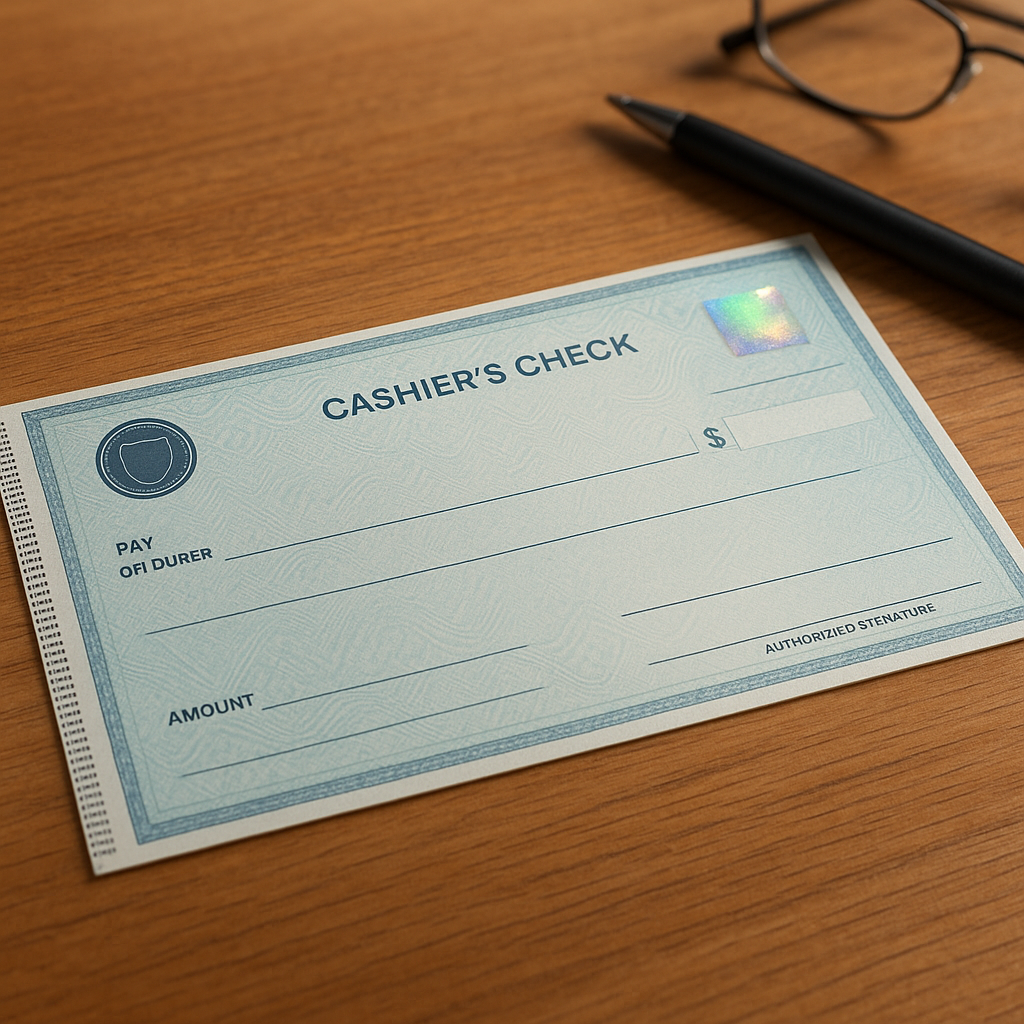
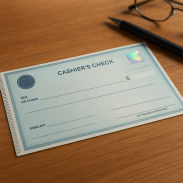
Cashier's Check in JPMorgan Chase
Cashier's Check — JPMorgan Chase
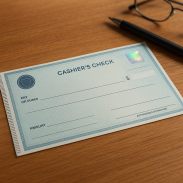
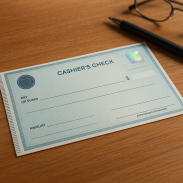
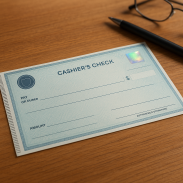
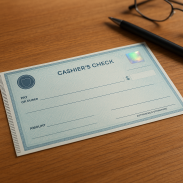
A Cashier's Check from JPMorgan Chase is a secure, bank-issued negotiable instrument that provides a reliable method for transferring funds between parties. Unlike a personal check drawn on an individual's account, a cashier's check is drawn on the bank's own funds and is typically viewed as more secure and trustworthy by recipients, sellers, and institutional payees. Whether you are completing a real estate closing, buying a vehicle, paying a contractor, or finalizing a business transaction, a cashier's check offers a payment form that reduces the risk of insufficient funds and increases acceptance in time-sensitive or high-value situations.
Key Benefits
- Guaranteed Funds — The bank assumes responsibility for payment, which reduces the risk of returned payments.
- High Acceptance — Widely accepted by sellers, title companies, escrow agents, and government offices as a trustworthy form of payment.
- Security Features — Manufactured with bank-level security measures to deter counterfeiting and alteration.
- Traceability — Serial numbers and bank records allow tracking and verification of issuance and payment status.
- Peace of Mind — Reduces the need to carry large sums of cash during important transactions.
How a Cashier's Check Works
When you request a cashier's check, JPMorgan Chase withdraws the specified amount from your account and transfers those funds to the bank's cashier account. The bank then issues a check in the payee’s name, signed by an authorized bank officer or a representative, and stamped with the bank’s official endorsement. Because the guarantee rests on the bank rather than the individual account holder, the payee can accept the check with a higher degree of confidence that it will clear.
When to Use a Cashier's Check
Common scenarios where a cashier's check is preferred include:
- Real estate closings and earnest money deposits.
- Vehicle purchases where the seller requires guaranteed funds.
- Large personal or business purchases that demand certified payment.
- Transactions with parties who do not accept personal checks or electronic transfers.
- Legal settlements or court-related payments that require a secure payment instrument.
How to Obtain a Cashier's Check
Cashier's checks are available at most branch locations. To obtain one, you will generally need to provide valid identification, the payee name as it should appear on the check, and the exact amount to be issued. The funds required for the check will be debited from your account at the time of issuance. For certain account types and customers, additional verification or documentation may be requested before issuing a cashier's check. Keep your receipt and any issuance records until the transaction is complete and the payee has confirmed deposit and clearance.
Security and Fraud Prevention
JPMorgan Chase cashier's checks include multiple security elements to deter fraud and tampering. These may include watermarks, microprinting, special inks, unique serial numbers, bank seals, and signature verifications. Despite these measures, cashier's check fraud exists. Exercise caution when accepting a cashier's check, especially from unknown parties. Verify the authenticity by inspecting the check carefully and by confirming payment status through the issuing bank using the check’s serial number and issuance details when necessary. Retain proof of the transaction and avoid sharing unnecessary personal information.
Clearing and Deposit Considerations
Although a cashier's check is backed by the bank, deposited cashier's checks may be subject to verification holds while the receiving bank confirms funds availability with the issuing bank. The exact timing of funds availability can vary based on the deposit location, the amount, and whether any verification is required. It is advisable to notify the recipient that they may experience a short hold period before funds are fully accessible. For large transactions, allow sufficient time for clearance and coordinate schedules accordingly.
Differences from Other Payment Types
- Cashier's Check vs. Personal Check — A personal check is drawn on an individual’s account and can bounce if funds are insufficient; a cashier's check is drawn on the bank’s funds and carries a stronger guarantee.
- Cashier's Check vs. Certified Check — A certified check confirms that the account holder had sufficient funds at the time of certification; a cashier's check transfers the obligation to the bank itself.
- Cashier's Check vs. Wire Transfer — Wire transfers move funds electronically and can be faster for immediate availability; cashier's checks provide a physical negotiable instrument often required for in-person transactions or for parties requiring paper proof of payment.
Practical Tips
- Always verify the payee name before the check is printed; altering a cashier's check can be difficult and may invalidate the instrument.
- Keep the receipt and issuance records until the payee confirms deposit and clearance.
- Avoid mailing cashier's checks without secure packaging; consider insured or tracked delivery if you must mail one.
- If asked to accept a cashier's check and immediately provide goods or funds back to the purchaser, be cautious—scammers often use counterfeit checks and request prompt secondary payments.
- For large or time-sensitive transactions, allow extra time for verification and clearance to prevent delays.
Frequently Asked Questions
Is a cashier's check the same everywhere? Practices and features can vary by institution. While the concept remains consistent, specific issuance procedures and security elements may differ.
Can a cashier's check be canceled? Cancellation is possible under certain conditions, typically if the check has not been negotiated and the issuing bank places a stop payment after verification. Procedures and timelines vary.
What should I do if a cashier's check is lost or stolen? Notify the issuing bank immediately and request guidance. The bank can place a stop payment or issue a replacement after appropriate verification and any required waiting period.
Conclusion
A Cashier's Check from JPMorgan Chase is a dependable payment tool for transactions that require guaranteed funds and broad acceptance. Its bank-backed payment assurance and built-in security measures make it suitable for high-value or formal transactions where reliability matters. For any transaction involving a cashier's check, plan ahead for verification and clearance procedures, retain pertinent documentation, and exercise standard precautions to minimize exposure to fraud.
Address Bank: 270 Park Avenue, New York City, United States
Bank: JPMorgan Chase
Headquarters: New York City
Products: Protection & Services
Type: Cashier's Check
Viewed Items
Banks2go — A Comprehensive Marketplace for Financial and Insurance Services
Banks2go is a user-friendly marketplace that helps you discover, compare, and apply for banking and insurance products in one place. Whether you’re building credit, opening a business account, or shopping for auto insurance, Banks2go brings together transparent information, smart tools, and trusted partners to make selection simple and fast.
Banking Products
Credit Cards- Compare a wide range of cards across APRs, intro 0% APR periods, rewards structures (cash back, travel miles, transferable points), welcome bonuses, balance transfer terms, foreign transaction fees, and penalty rates.
- Filter by your goals—everyday cash back, premium travel, no-annual-fee, balance transfer, or credit building—and see estimated value based on your spending profile.
- Get instant prequalification checks with no impact to your credit score, complete secure online applications in minutes, and track application status in real time.
- See key terms clearly explained: grace periods, minimum payments, credit limits, authorized user rules, and redemption options (statement credit, travel portals, partner transfers).
- Access educational guidance on responsible credit use, utilization ratios, and how on-time payments can strengthen your credit over time.
- Compare business accounts side-by-side on monthly maintenance fees, minimum balance requirements, included free transactions, ACH and wire pricing, cash deposit limits, ATM access, and treasury features.
- Explore value-added services like merchant processing, virtual cards, integrated invoicing, and expense management.
- Onboard quickly online for LLCs, corporations, and sole proprietors with clear documentation checklists and guided KYC/AML steps.
- Connect your account to popular accounting and finance tools (e.g., QuickBooks, Xero) for streamlined reconciliation, payroll, and tax prep.
- View specialized options for startups, freelancers, and nonprofits, including accounts with no or low fees and scalable limits as your business grows.
- Find student-friendly cards with no or low annual fees, simple rewards, spending controls, and features designed to build credit responsibly.
- Get clear eligibility guidance for both domestic and international students, including SSN/ITIN requirements and income verification tips.
- Learn about security deposits for secured cards, credit limit increases with good behavior, and tools that help track spending and avoid late fees.
- Access resources on establishing credit from scratch, protecting your score, and using student benefits like streaming or transit rewards.
Insurance
Auto Insurance- Compare quotes from top-rated national and regional carriers across states, with coverage options that include liability, collision, comprehensive, uninsured/underinsured motorist, roadside assistance, and rental reimbursement.
- Customize deductibles and limits and see how changes affect your monthly premium in real time.
- Explore common discounts—safe driver, multi-policy, good student, usage-based/telematics, multi-vehicle—and understand eligibility criteria.
- Bind e-policies in minutes with digital ID cards and flexible payment options (monthly, quarterly, semi-annual).
- Access plain-English explanations of state minimums, gap insurance for financed vehicles, and when it makes sense to add or drop coverage types.
Easy Selection
Smart Filtering and Personalization- Use dynamic filters and guided questionnaires to surface recommendations based on your financial profile, risk tolerance, and specific goals (e.g., pay down debt, earn travel rewards, reduce fees).
- Compare key terms side-by-side—rates, fees, limits, perks, coverage details, and exclusions—so trade-offs are obvious and transparent.
- Read concise summaries and detailed breakdowns in plain English, with highlight callouts for gotchas like deferred interest, balance transfer fees, or coverage gaps.
Wide Catalog
Broad, Up-to-Date Network- Access a wide network of U.S. banks, credit unions, fintechs, and national insurers—all in one place—so you don’t need to visit branches or spend hours on phone calls.
- See current promotions, limited-time offers, and partner deals aggregated and refreshed regularly, with clear eligibility and expiration details.
- Benefit from standardized comparisons that make complex products easy to understand and evaluate.
Why Banks2go
- Speed and Transparency: From prequalification to application and policy binding, steps are consolidated and clearly explained.
- Education Built In: Bite-sized guides and checklists help you make confident decisions without financial jargon.
- Secure and Privacy-Conscious: Application flows follow industry-standard security protocols, and prequalification tools avoid hard credit pulls unless you opt to apply.
Choose what you need
 More than
50000
services
 Convenient search
 The most beautiful site
 The site works 24/7