Cashier's Check Commerce Bancshares in USA
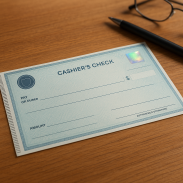
Cashier's Check
A cashier's check is a bank-issued certified instrument that guarantees funds for the recipient, combining the reliability of a bank's credit with the convenience of a check. Unlike a personal check, which is drawn on an individual account, a cashier's check is drawn on the bank's own funds, making it one of the most trusted forms of payment for high-value transactions, real estate closings, vehicle purchases, and any situation where payment certainty is essential.
Why Choose a Cashier's Check?
- Guaranteed Funds: The issuing bank assumes responsibility for the payment, significantly reducing the risk of a returned or bounced check.
- High Acceptance: Landlords, escrow agents, car dealerships, and many businesses prefer cashier's checks for large payments because they are nearly as reliable as wire transfers.
- Perceived Professionalism: Presenting a cashier's check signals seriousness and financial stability in transactions that require trust and formal settlement.
- Safer Than Carrying Cash: For large amounts, a cashier's check is more secure than carrying physical currency and easier to document for records and receipts.
How a Cashier's Check Works
When you request a cashier's check, you provide funds to your bank (usually via withdrawal from your account or by other acceptable means). The bank then issues a check payable to the specified recipient and guarantees payment. The bank’s name appears as the payer, and the check is backed by the institution’s funds — not your personal account. This structure creates a high level of payment certainty for the payee.
Typical Uses and Scenarios
Cashier's checks are ideal for situations that demand verified, reversible-free payment. Common scenarios include:
- Real estate purchases, earnest money deposits, and lease security deposits.
- Automobile purchases, especially private-party transactions.
- Large purchases where seller acceptance is contingent on guaranteed funds.
- Legal settlements and court-ordered payments.
- Escrow arrangements and business-to-business transactions requiring formal payment proof.
How to Obtain a Cashier's Check
The process is straightforward:
- Visit your bank branch or use your bank’s secure online request (if available).
- Provide identification and the payee’s full legal name as it should appear on the check.
- Specify the exact amount and any required memo or reference.
- Pay the bank the check amount in addition to any applicable fee. The bank then issues the cashier's check immediately or on the same business day.
Fees, Limits, and Processing Time
Banks typically charge a fee for issuing a cashier's check. Fee amounts vary by institution and account type; some premium accounts may waive them. Checks are usually issued immediately in-branch. When depositing a cashier's check, banks often place a temporary hold to verify authenticity, especially for large amounts or if the check is from a different financial institution. Hold durations follow federal and bank-specific policies and can range from one business day to several days for verification.
Security Features and Fraud Prevention
Cashier's checks incorporate multiple security features — watermarks, special inks, embossed seals, and unique serial numbers — to deter counterfeiting and alteration. Despite these protections, counterfeit cashier's checks do exist. To minimize risk:
- Obtain cashier's checks directly from your bank; avoid unsolicited offers or third-party sellers.
- Verify the bank’s contact information independently before accepting or depositing a check.
- Ask the issuing bank to confirm validity if you receive a cashier's check from an unfamiliar source, particularly for large sums or online transactions.
- Be cautious with overpayments and requests to return funds — these are common red flags in scams involving cashier's checks.
Endorsement, Deposit, and Cashing
To deposit or cash a cashier's check, endorse the back as required and present it to your bank or the issuing bank. Many banks will process cashier's checks for account holders immediately, while others may require a verification period. If you need to cash the check outside your bank, some issuing banks will cash it if you provide identification; expect verification procedures and potential fees.
Comparing Cashier's Checks to Other Payment Methods
- Vs. Personal Checks: Cashier's checks are bank-guaranteed and far less likely to be returned for insufficient funds.
- Vs. Wire Transfers: Wire transfers are faster and virtually irreversible, but they can be costlier and offer less paper trail for recipients who prefer a physical instrument.
- Vs. Certified Checks: A certified check is a personal check with a bank certification of funds; a cashier's check is drawn on the bank itself and is generally regarded as more secure.
Legal and Practical Considerations
While cashier's checks are legally strong instruments, their handling is subject to banking regulations and institutional policies. Keep clear records: retain receipts, record the check number and amount, and document the payee. If a cashier's check is lost or stolen, contact the issuing bank immediately to place a stop payment or request a reissue — note that banks typically require an indemnity bond and a waiting period before reissuing funds to protect against fraud.
Tips for Buyers and Sellers
- Buyers: Request a receipt and avoid revealing more personal account information than necessary. Consider meeting at a branch to obtain the check in person and, if possible, have the seller verify the check with the issuing bank before completing the exchange.
- Sellers: Verify the cashier's check with the issuing bank on a verified phone number or in person before transferring goods, especially for large transactions or when dealing with unknown buyers.
- Record-keeping: Photograph or scan the check and keep a copy of your receipt for dispute resolution and tax purposes.
Frequently Asked Questions
Q: How long does it take to clear a cashier's check? A: Many banks clear cashier's checks quickly, but verification holds are common for large amounts and can take several business days. Check your bank’s funds availability policy for specifics.
Q: Can cashier's checks be canceled? A: Yes — the issuing bank can place a stop payment or refuse to cash a lost, stolen, or suspected counterfeit check, but processes and wait times vary and may require affidavits or indemnity bonds.
Q: Are cashier's checks secure for online transactions? A: They are more secure than personal checks, but online scams still target cashier's checks. Always verify the payer and consider safer alternatives like wire transfers for large online purchases.
Conclusion
Cashier's checks remain a trusted, widely accepted instrument for transactions where payment certainty and an official paper trail matter. They combine the bank’s creditworthiness with a tangible payment method, making them especially useful for high-value exchanges. By understanding how cashier's checks work, recognizing security features and common fraud patterns, and following practical verification steps, both buyers and sellers can use cashier's checks safely and confidently.