Invoice Financing in Webster Bank
Invoice Financing in Webster Bank
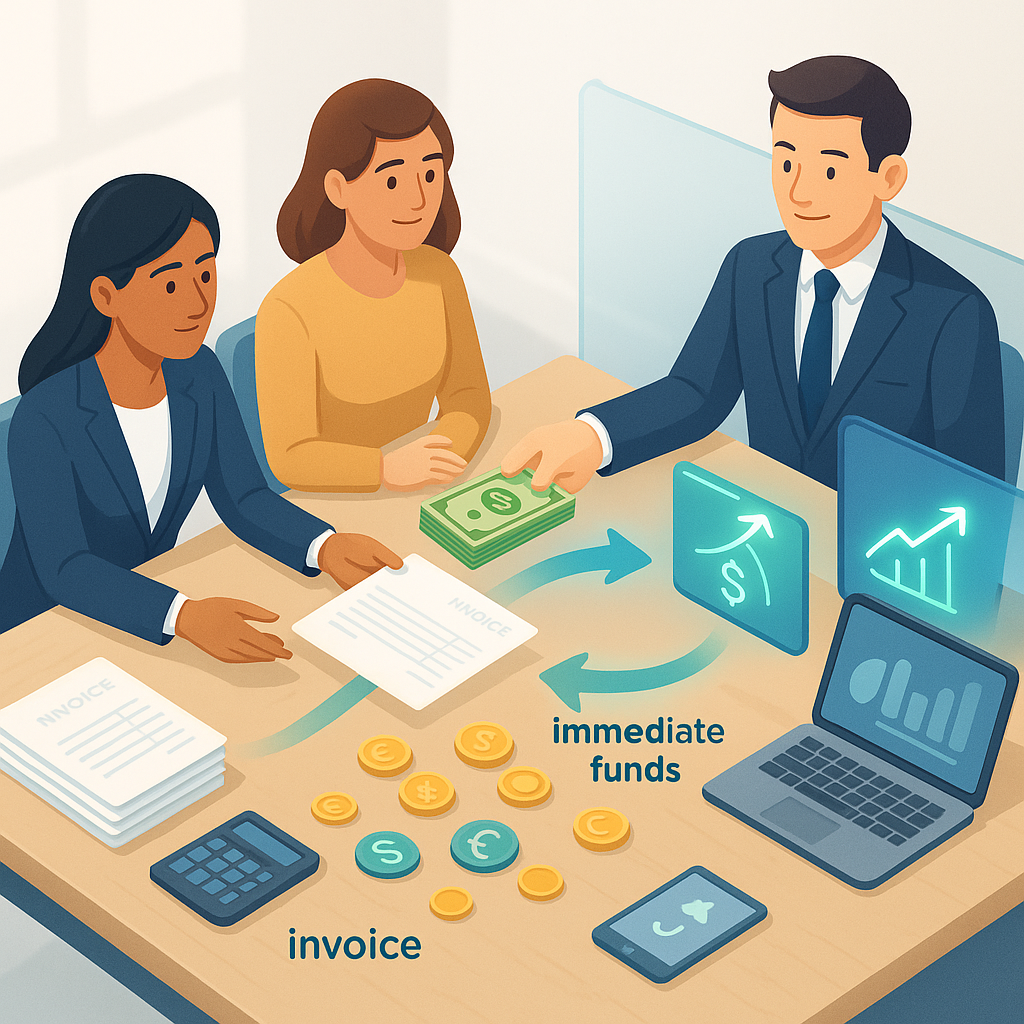
Invoice Financing in Webster Bank is a working capital solution designed to help businesses convert unpaid customer invoices into immediate cash. Ideal for companies experiencing rapid growth, seasonal fluctuations, or delayed receivables, this facility accelerates cash flow without waiting for standard invoice payment terms. Webster Bank’s invoice financing options combine the bank’s commercial lending experience with flexible underwriting to support a variety of industries and business models.
Key Benefits
- Improved cash flow: Access a portion of outstanding invoice value immediately to cover payroll, inventory, supplier payments, and other operating expenses.
- Flexible funding: Borrowing capacity grows with your receivables, giving businesses a scalable way to finance growth without taking on long-term debt.
- Faster growth: Use available funds to fulfill larger orders, expand into new markets, or invest in marketing and sales initiatives.
- Preserve existing credit lines: Invoice financing can complement existing bank lines by providing liquidity tied directly to sales, leaving other facilities available for alternative needs.
- Customizable structure: Options may include recourse or non-recourse factoring, invoice discounting, or a hybrid arrangement based on credit quality of your customers and the bank’s risk assessment.
How It Works
Invoice financing at Webster Bank typically involves three basic steps:
- Submit invoices: You provide copies of eligible invoices owed by your customers.
- Receive advance: Webster Bank advances a percentage of the invoice value (commonly between 70% and 90%) to your business, usually within one to two business days of approval.
- Collect payment and settle: When the customer pays the invoice, the bank applies the payment to the outstanding balance and remits any remaining funds to you, minus fees and interest.
Types of Invoice Financing
- Factoring: The bank purchases invoices outright and handles collections. This can be recourse or non-recourse depending on credit acceptance and agreement terms.
- Invoice discounting: You retain responsibility for collections while the bank provides an advance against invoices. This option is often used by businesses that prefer to maintain control of customer relationships.
- Selective invoice financing: Finance only specific invoices rather than the entire book, allowing for selective use based on customer credit or particular cash needs.
Eligibility and Documentation
Eligibility generally depends on the creditworthiness of your customer base, the size and frequency of invoices, and the stability of your accounts receivable. Typical documentation requirements include:
- Recent accounts receivable aging reports
- Copies of invoices to be financed
- Customer purchase orders or sales contracts
- Basic business financial statements and bank statements
- Business formation documents and authorization forms
Pricing and Fees
Costs for invoice financing may include an advance fee, a discount fee (interest calculated on the financed amount for the duration of the advance), and other administrative charges. Pricing depends on factors such as:
- Credit risk of your customers
- Volume and turnover of receivables
- Contract structure (recourse vs. non-recourse)
- Contract length and any additional services required
Who Should Consider Invoice Financing
Invoice financing is especially well-suited for:
- Businesses with long payment terms (30 to 120 days) that need to accelerate working capital
- Companies experiencing rapid growth that require funds to purchase inventory or hire staff
- Seasonal businesses that need to build inventory or cover payroll during peak production
- Service providers and manufacturers with a reliable base of creditworthy customers
Operational Considerations
Before committing to an invoice financing arrangement, consider the following operational factors:
- Customer notification: Some agreements require notifying customers that invoices are assigned to the bank; others allow confidential arrangements where you continue to manage collections.
- Integration: Ensure your accounting and invoicing systems can provide timely, accurate receivable information to the bank.
- Concentration risk: Relying heavily on a small number of customers can affect your facility’s availability and pricing.
- Impact on customer relationships: If the bank manages collections, coordinate customer communications to maintain service and reputation.
Risk Management and Protections
Invoice financing can reduce liquidity risk, but it introduces other considerations. Webster Bank typically assesses customer credit thoroughly and may include covenants or limits to protect both parties. Businesses should:
- Monitor receivable quality and customer concentration
- Maintain transparent financial reporting
- Understand recourse provisions and dispute resolution procedures
Implementation Timeline
The timeline from application to funding varies depending on the completeness of documentation and complexity of the receivables. Typical stages include initial assessment, underwriting, legal documentation, system setup, and first funding. Many qualified applicants can access funds within days after approval.
Accounting and Tax Treatment
Invoice financing affects accounting records differently depending on whether the facility is structured as a sale (factoring) or a secured borrowing (invoice discounting). Review accounting treatment with your financial advisor or accountant to ensure correct presentation of receivables, liabilities, and interest expense. Tax implications also vary by structure and jurisdiction and should be evaluated as part of broader financial planning.
Tips for Maximizing Value
- Keep accurate, up-to-date receivables and supporting documentation to speed underwriting and reduce fees.
- Diversify your customer base to avoid concentration limits that can restrict funding capacity.
- Negotiate terms based on your growth plan—seasonal increases or one-time large orders may justify temporary higher utilization.
- Integrate invoicing and banking workflows to minimize delays in funding and reconciliation.
Conclusion
Invoice Financing in Webster Bank provides a practical, flexible way to convert receivables into working capital, supporting cash flow needs without waiting for customers to pay. With a range of structures tailored to varying business models and customer profiles, this financing solution can support growth, stabilize operations, and preserve other credit lines. Evaluate your receivables profile, discuss structure options, and align the facility with your business strategy to make the most of invoice financing.
Address Bank: Stamford, Connecticut, U.S.
Bank: Webster Bank
Headquarters: Stamford, Connecticut
Products: Business Financing
Type: Invoice Financing












Banks2go — A Comprehensive Marketplace for Financial and Insurance Services
Banks2go is a user-friendly marketplace that helps you discover, compare, and apply for banking and insurance products in one place. Whether you’re building credit, opening a business account, or shopping for auto insurance, Banks2go brings together transparent information, smart tools, and trusted partners to make selection simple and fast.
Banking Products
Credit Cards- Compare a wide range of cards across APRs, intro 0% APR periods, rewards structures (cash back, travel miles, transferable points), welcome bonuses, balance transfer terms, foreign transaction fees, and penalty rates.
- Filter by your goals—everyday cash back, premium travel, no-annual-fee, balance transfer, or credit building—and see estimated value based on your spending profile.
- Get instant prequalification checks with no impact to your credit score, complete secure online applications in minutes, and track application status in real time.
- See key terms clearly explained: grace periods, minimum payments, credit limits, authorized user rules, and redemption options (statement credit, travel portals, partner transfers).
- Access educational guidance on responsible credit use, utilization ratios, and how on-time payments can strengthen your credit over time.
- Compare business accounts side-by-side on monthly maintenance fees, minimum balance requirements, included free transactions, ACH and wire pricing, cash deposit limits, ATM access, and treasury features.
- Explore value-added services like merchant processing, virtual cards, integrated invoicing, and expense management.
- Onboard quickly online for LLCs, corporations, and sole proprietors with clear documentation checklists and guided KYC/AML steps.
- Connect your account to popular accounting and finance tools (e.g., QuickBooks, Xero) for streamlined reconciliation, payroll, and tax prep.
- View specialized options for startups, freelancers, and nonprofits, including accounts with no or low fees and scalable limits as your business grows.
- Find student-friendly cards with no or low annual fees, simple rewards, spending controls, and features designed to build credit responsibly.
- Get clear eligibility guidance for both domestic and international students, including SSN/ITIN requirements and income verification tips.
- Learn about security deposits for secured cards, credit limit increases with good behavior, and tools that help track spending and avoid late fees.
- Access resources on establishing credit from scratch, protecting your score, and using student benefits like streaming or transit rewards.
Insurance
Auto Insurance- Compare quotes from top-rated national and regional carriers across states, with coverage options that include liability, collision, comprehensive, uninsured/underinsured motorist, roadside assistance, and rental reimbursement.
- Customize deductibles and limits and see how changes affect your monthly premium in real time.
- Explore common discounts—safe driver, multi-policy, good student, usage-based/telematics, multi-vehicle—and understand eligibility criteria.
- Bind e-policies in minutes with digital ID cards and flexible payment options (monthly, quarterly, semi-annual).
- Access plain-English explanations of state minimums, gap insurance for financed vehicles, and when it makes sense to add or drop coverage types.
Easy Selection
Smart Filtering and Personalization- Use dynamic filters and guided questionnaires to surface recommendations based on your financial profile, risk tolerance, and specific goals (e.g., pay down debt, earn travel rewards, reduce fees).
- Compare key terms side-by-side—rates, fees, limits, perks, coverage details, and exclusions—so trade-offs are obvious and transparent.
- Read concise summaries and detailed breakdowns in plain English, with highlight callouts for gotchas like deferred interest, balance transfer fees, or coverage gaps.
Wide Catalog
Broad, Up-to-Date Network- Access a wide network of U.S. banks, credit unions, fintechs, and national insurers—all in one place—so you don’t need to visit branches or spend hours on phone calls.
- See current promotions, limited-time offers, and partner deals aggregated and refreshed regularly, with clear eligibility and expiration details.
- Benefit from standardized comparisons that make complex products easy to understand and evaluate.
Why Banks2go
- Speed and Transparency: From prequalification to application and policy binding, steps are consolidated and clearly explained.
- Education Built In: Bite-sized guides and checklists help you make confident decisions without financial jargon.
- Secure and Privacy-Conscious: Application flows follow industry-standard security protocols, and prequalification tools avoid hard credit pulls unless you opt to apply.
Choose what you need
 More than
50000
services
 Convenient search
 The most beautiful site
 The site works 24/7