Invoice Financing in United Bank (West Virginia)
Invoice Financing in United Bank (West Virginia)
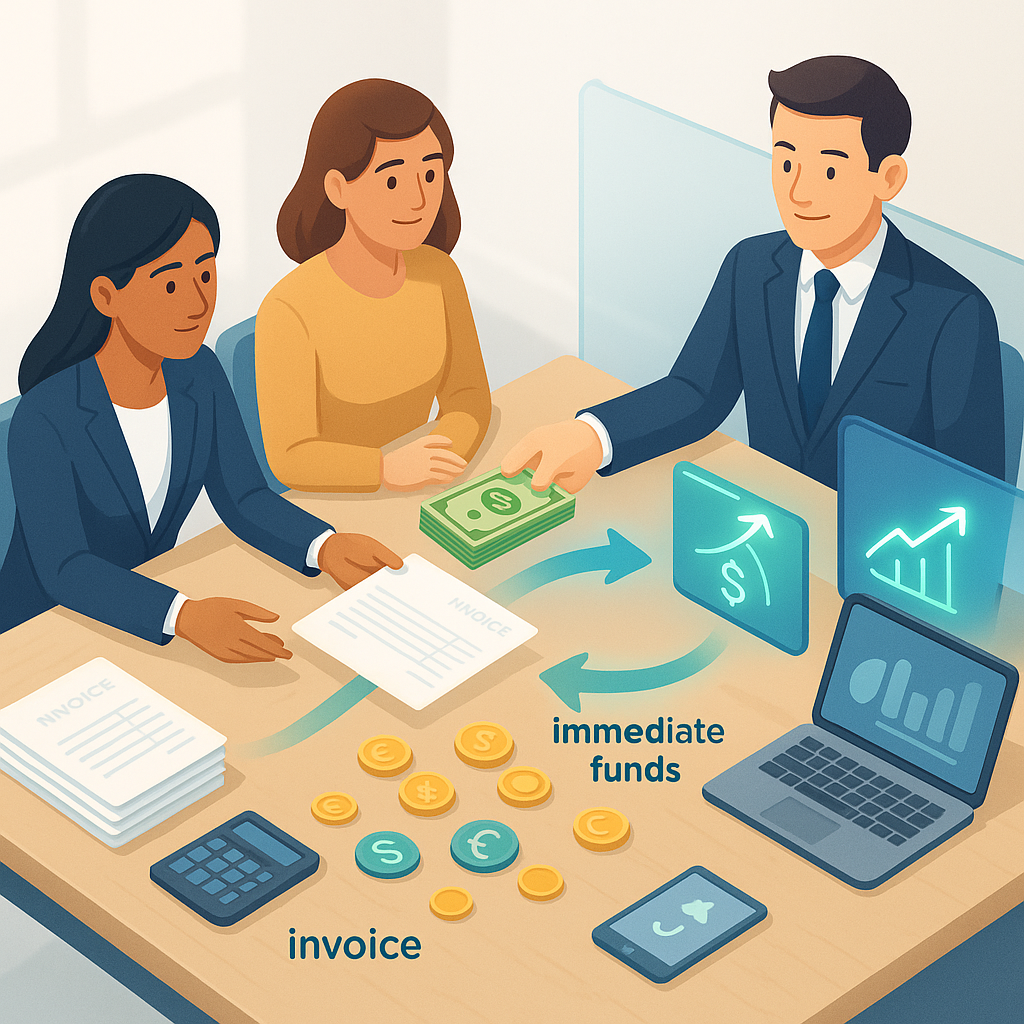
Invoice Financing from United Bank in West Virginia is a practical, flexible solution for businesses that need faster access to working capital tied up in unpaid invoices. Designed to support small and medium-sized enterprises across varied industries—manufacturing, distribution, professional services, construction, and more—this product converts outstanding receivables into immediate cash to help stabilize cash flow, cover payroll, seize growth opportunities, and meet seasonal demands.
Key Benefits
- Improved cash flow: Unlock cash from approved invoices quickly rather than waiting for customer payment terms (often 30–90 days).
- Flexible funding: Borrow against an ongoing accounts receivable portfolio rather than taking a fixed-term loan, allowing financing to scale with sales.
- Faster growth: Use immediate funds to pursue new contracts, expand operations, or invest in inventory without diluting ownership.
- Reduced collection burden: Depending on the program, credit and collections support may be offered, letting businesses focus on operations.
- Credit risk options: Select between recourse and non-recourse structures to align risk with preferences and pricing.
How Invoice Financing Works
Invoice Financing typically follows a clear, straightforward process. After an application and approval, eligible unpaid invoices are submitted to the bank. The bank advances a percentage of the invoice value—commonly 70% to 90%—to the business. When the account debtor pays the invoice, the bank remits the remaining balance to the client, minus fees and any interest. The cycle repeats as new invoices are presented, providing an ongoing source of working capital.
Product Features
- Advance rate: Competitive advance rates per invoice, contingent on creditworthiness of account debtors and the quality of receivables.
- Fee structure: Transparent fee model that may include a discount fee, service charges, and interest on outstanding advances; fees vary by structure and risk.
- Advance frequency: Daily or periodic draws available to match billing cycles and operational needs.
- Eligibility flexibility: Available for various industries and business sizes, with underwriting focused on receivables quality and customer credit.
- Online account management: Secure digital tools to submit invoices, track advances, and view statements (where applicable) for efficient administration.
Eligibility and Underwriting
Eligibility is typically based on a combination of factors: the creditworthiness of your invoiced customers, the aging and concentration of receivables, the stability of your business operations, and financial performance indicators. United Bank’s regional knowledge of West Virginia markets helps tailor underwriting to local business dynamics, while prioritizing transparency and speed in decision-making.
Typical Uses for Businesses in West Virginia
- Managing seasonality: Smooth receipts during peak and off-peak periods for tourism, retail, and agriculture-related businesses.
- Fulfilling large contracts: Bridge the cash gap on long-duration projects in construction and manufacturing.
- Supporting supplier payments: Maintain favorable terms with vendors by paying promptly while awaiting customer remittances.
- Payroll and benefits: Ensure steady payroll coverage without tapping emergency reserves or personal capital.
- Seizing growth opportunities: Invest in marketing, hiring, or equipment to capitalize on market demand.
Recourse vs. Non-Recourse Options
Invoice Financing can be structured as recourse (the business ultimately remains responsible if a customer fails to pay) or non-recourse (the bank assumes defined credit risk for specified debtors). Each structure affects pricing and eligibility. Recourse financing often offers lower costs but higher responsibility; non-recourse provides more protection against customer insolvency but typically incurs higher fees and stricter debtor criteria.
Application Process
- Initial consultation: Discuss financing needs, receivables profile, and typical invoice terms with a banking specialist.
- Document submission: Provide financial statements, accounts receivable aging reports, customer contracts, and other pertinent documentation.
- Underwriting: Bank evaluates the credit quality of account debtors, receivables concentration, and company financials to determine terms and advance rates.
- Onboarding: Once approved, set up account controls, disbursement mechanics, and reporting procedures.
- Ongoing management: Submit invoices as issued and receive advances according to the agreed schedule; regular statements reconcile activity.
Costs and Considerations
Costs vary depending on program structure, debtor risk, and the advance amount. Typical components include discount fees calculated as a percentage of invoice value, daily or monthly interest on advances, and administrative fees. Businesses should evaluate the effective annualized cost relative to the benefit of faster cash flow and reduced financing risk. Transparent fee disclosure and clear communication on how fees are applied are core to the offering.
Why Choose Invoice Financing?
Invoice Financing offers a less restrictive alternative to traditional term loans or equity financing. It aligns borrowing capacity with sales performance, avoids long-term debt obligations, and can be put in place quickly to address immediate liquidity needs. For businesses operating in West Virginia—where industries range from energy and manufacturing to professional services and retail—this product supports operational continuity and growth without sacrificing control of the business.
Frequently Asked Questions
Will the bank contact my customers?
Procedures vary. Some invoices remain confidential (notifying only at the time of payment), while other arrangements require notification. The onboarding process clarifies how collections will be handled.
How quickly can funds be received?
Once invoices are approved, advances can often be funded within one to several business days, depending on verification steps and the program selected.
Can I finance partial invoice portfolios?
Yes. Many businesses elect to present a selection of receivables or an entire eligible receivables ledger, depending on strategic needs and program terms.
Conclusion
Invoice Financing at United Bank in West Virginia provides a dependable, adaptable financing alternative to accelerate cash flow and support business goals. By converting unpaid invoices into near-term liquidity, companies can maintain smooth operations, capitalize on opportunities, and navigate growth with greater certainty. Careful evaluation of program structure, fees, and debtor risk will help determine the optimal solution for each organization’s needs.
Address Bank: Charleston, West Virginia, United States Fairfax, Virginia, United States
Bank: United Bank (West Virginia)
Headquarters: Charleston, West Virginia
Products: Business Financing
Type: Invoice Financing








Viewed Items

Banks2go — A Comprehensive Marketplace for Financial and Insurance Services
Banks2go is a user-friendly marketplace that helps you discover, compare, and apply for banking and insurance products in one place. Whether you’re building credit, opening a business account, or shopping for auto insurance, Banks2go brings together transparent information, smart tools, and trusted partners to make selection simple and fast.
Banking Products
Credit Cards- Compare a wide range of cards across APRs, intro 0% APR periods, rewards structures (cash back, travel miles, transferable points), welcome bonuses, balance transfer terms, foreign transaction fees, and penalty rates.
- Filter by your goals—everyday cash back, premium travel, no-annual-fee, balance transfer, or credit building—and see estimated value based on your spending profile.
- Get instant prequalification checks with no impact to your credit score, complete secure online applications in minutes, and track application status in real time.
- See key terms clearly explained: grace periods, minimum payments, credit limits, authorized user rules, and redemption options (statement credit, travel portals, partner transfers).
- Access educational guidance on responsible credit use, utilization ratios, and how on-time payments can strengthen your credit over time.
- Compare business accounts side-by-side on monthly maintenance fees, minimum balance requirements, included free transactions, ACH and wire pricing, cash deposit limits, ATM access, and treasury features.
- Explore value-added services like merchant processing, virtual cards, integrated invoicing, and expense management.
- Onboard quickly online for LLCs, corporations, and sole proprietors with clear documentation checklists and guided KYC/AML steps.
- Connect your account to popular accounting and finance tools (e.g., QuickBooks, Xero) for streamlined reconciliation, payroll, and tax prep.
- View specialized options for startups, freelancers, and nonprofits, including accounts with no or low fees and scalable limits as your business grows.
- Find student-friendly cards with no or low annual fees, simple rewards, spending controls, and features designed to build credit responsibly.
- Get clear eligibility guidance for both domestic and international students, including SSN/ITIN requirements and income verification tips.
- Learn about security deposits for secured cards, credit limit increases with good behavior, and tools that help track spending and avoid late fees.
- Access resources on establishing credit from scratch, protecting your score, and using student benefits like streaming or transit rewards.
Insurance
Auto Insurance- Compare quotes from top-rated national and regional carriers across states, with coverage options that include liability, collision, comprehensive, uninsured/underinsured motorist, roadside assistance, and rental reimbursement.
- Customize deductibles and limits and see how changes affect your monthly premium in real time.
- Explore common discounts—safe driver, multi-policy, good student, usage-based/telematics, multi-vehicle—and understand eligibility criteria.
- Bind e-policies in minutes with digital ID cards and flexible payment options (monthly, quarterly, semi-annual).
- Access plain-English explanations of state minimums, gap insurance for financed vehicles, and when it makes sense to add or drop coverage types.
Easy Selection
Smart Filtering and Personalization- Use dynamic filters and guided questionnaires to surface recommendations based on your financial profile, risk tolerance, and specific goals (e.g., pay down debt, earn travel rewards, reduce fees).
- Compare key terms side-by-side—rates, fees, limits, perks, coverage details, and exclusions—so trade-offs are obvious and transparent.
- Read concise summaries and detailed breakdowns in plain English, with highlight callouts for gotchas like deferred interest, balance transfer fees, or coverage gaps.
Wide Catalog
Broad, Up-to-Date Network- Access a wide network of U.S. banks, credit unions, fintechs, and national insurers—all in one place—so you don’t need to visit branches or spend hours on phone calls.
- See current promotions, limited-time offers, and partner deals aggregated and refreshed regularly, with clear eligibility and expiration details.
- Benefit from standardized comparisons that make complex products easy to understand and evaluate.
Why Banks2go
- Speed and Transparency: From prequalification to application and policy binding, steps are consolidated and clearly explained.
- Education Built In: Bite-sized guides and checklists help you make confident decisions without financial jargon.
- Secure and Privacy-Conscious: Application flows follow industry-standard security protocols, and prequalification tools avoid hard credit pulls unless you opt to apply.
Choose what you need
 More than
50000
services
 Convenient search
 The most beautiful site
 The site works 24/7